How to wash a wool sweater without ruining it
Wool does not get ruined by water. It gets ruined by heat, by movement, and by the two of them together. Understand that one sentence and every rule below stops being a superstition you follow and becomes something you can reason about, including the cases nobody wrote a label for.
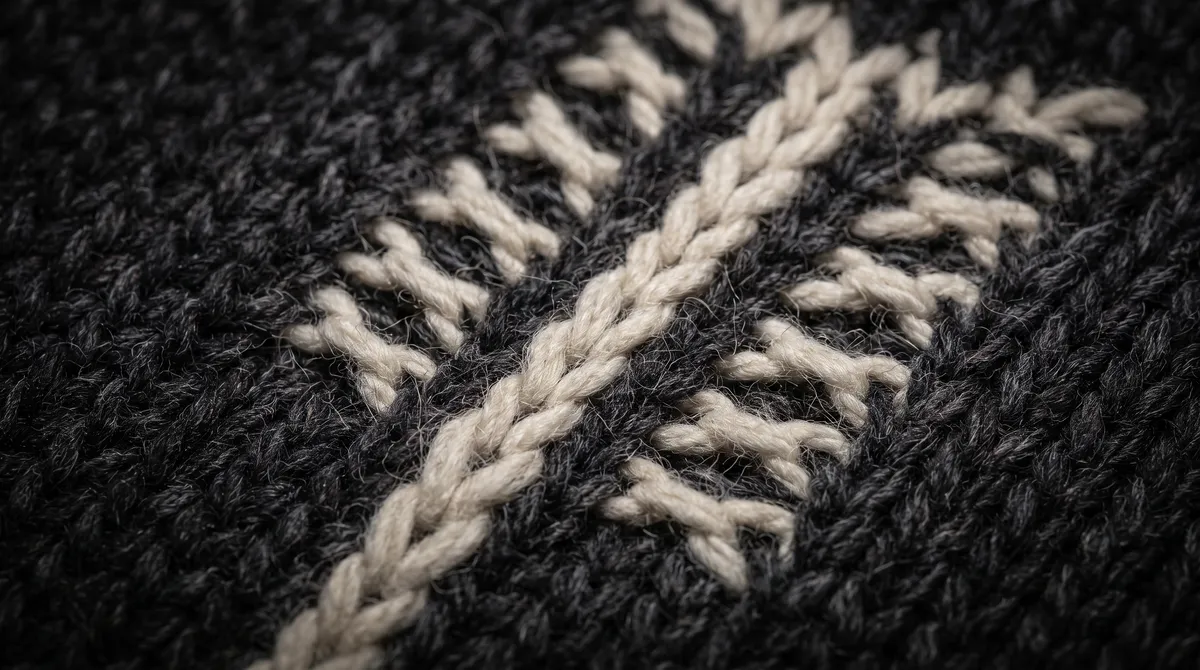
A wool fibre is covered in microscopic scales, like roof tiles laid along a stem. Hot water opens those scales, movement makes them catch on each other, and once they have interlocked they do not let go. That is felting, and it is permanent: no amount of stretching brings the garment back. A sweater that came out of the machine two sizes smaller was not shrunk, it was felted.
The short version
Cold or lukewarm water, 30 degrees maximum, and never a temperature change mid-wash.
As little movement as possible: no rubbing, no wringing, no long spin.
Wool detergent or a mild one without enzymes and without bleach.
Dry flat on a towel, away from radiators and direct sun.
Fold to store, never hang.
Washing it by hand
Fill a basin with cold or lukewarm water and dissolve a capful of wool detergent before the garment goes in, so no concentrated detergent ever sits on the fibre. Turn the sweater inside out and let it sink. Press it gently under the water a few times and then leave it for ten to fifteen minutes. Do not rub, do not twist, do not scrub at a stain: pressing is the only motion allowed.
Rinse in water at the same temperature as the wash. This is the step most people get wrong. Wool tolerates cold and it tolerates lukewarm, but a hot wash followed by a cold rinse is a shock that closes the scales violently, and that is felting again.
Never wring it out. Press the water out against the side of the basin, then lay the sweater on a large towel, roll the towel up with the sweater inside like a Swiss roll, and press along the roll. The towel takes the water and the knit never gets twisted.
Washing it in the machine
You can, and for a heavyweight jacquard we actually prefer it, because a good wool cycle moves the drum less than most people move their hands. Turn the garment inside out, put it in a mesh laundry net, and use the wool or hand-wash programme at 30 degrees with the spin at 400 rpm or lower. Wool detergent only. No fabric softener, which coats the fibre and flattens the loft that makes the sweater warm in the first place.
Wash it alone or with other wool. A zip or a pair of jeans in the same drum will pull threads out of a knit, and a snagged loop on a jacquard motif is a much more visible problem than a snag on a plain sweater.
Drying it
Lay it flat. This is the rule that people skip and then regret, because it is the slow one. A heavyweight knit holds a lot of water, and water is heavy: hang it wet and gravity stretches the shoulders and lengthens the body permanently while it dries. Lay the sweater on a dry towel, push it gently back into its own shape, and leave it. Change the towel once when it is soaked through.
Keep it away from radiators, hot air and direct sun. Heat dries the fibre out and makes it brittle, and sun takes the colour out of a black knit faster than any wash. A room with air moving through it will dry a 600 gram sweater in a day or two, which is exactly as fast as it should be.
Storing it so it survives the summer
Fold, never hang: on a hanger the shoulders carry the whole weight for six months and the garment comes back out with two peaks in it. Fold it, and if you have several, do not stack more than three or four high.
Store it clean. Moths are not interested in wool as such, they are interested in what is on it: skin, sweat, food traces. A sweater put away dirty is an invitation, a sweater put away washed is much less interesting. Cedar blocks or lavender sachets help; sealed plastic bags do not, because wool needs to breathe and trapped humidity brings mould.
If something does get in, freezing works. Seal the garment in a bag, leave it in the freezer for 72 hours, then wash it as usual. It kills eggs and larvae without a single chemical.
What to do when it goes wrong
A slightly felted sweater can sometimes be recovered: soak it in lukewarm water with a generous amount of hair conditioner for half an hour, which relaxes the fibre, then stretch it gently back towards its shape while damp and dry it flat under a little tension. It works for a mild case. It does not work for a sweater that went through a 60 degree cycle, and nothing does.
A pulled thread is not a hole and must not be cut. Turn the garment inside out and ease the loop back through with a blunt needle, working from either side of the snag, until the tension redistributes. On a jacquard the motif closes up again and you will not find the spot afterwards.
Our own pieces are a 50% wool and 50% acrylic heavyweight knit, which is more forgiving than pure wool on all of the above: the acrylic does not felt, so the fabric is harder to destroy in a moment of distraction. It still hates heat, gravity and rubbing. Wool cycle at 30, inside out, dry flat, and a piece knitted this year will still be here in ten.
The pieces in this story
More from the Journal
What is jacquard knit, and why it beats a print
In a jacquard sweater the pattern is not on the fabric, it is the fabric. Here is how it is made and how to spot one in three seconds.
Intarsia, jacquard and fair isle: what the difference really is
Three words used as if they meant the same thing. They describe three different answers to one question: what happens to the yarn you are not using.
Why sweaters pill, and how to actually fix it
Pilling is friction, not quality. Here is what is actually happening on the surface of the fabric and the two minutes it takes to undo.
Knitted, never printed
Every motif is jacquard worked into the fabric on flat-bed machines. Nothing to crack, nothing to peel.
Made to order in Italy
Your piece does not exist until you order it: knitted, hand-finished and steamed in 2 to 3 weeks.
Free worldwide shipping
Tracked and free everywhere, with free size exchanges and 14 day returns.