What is jacquard knit, and why it beats a print
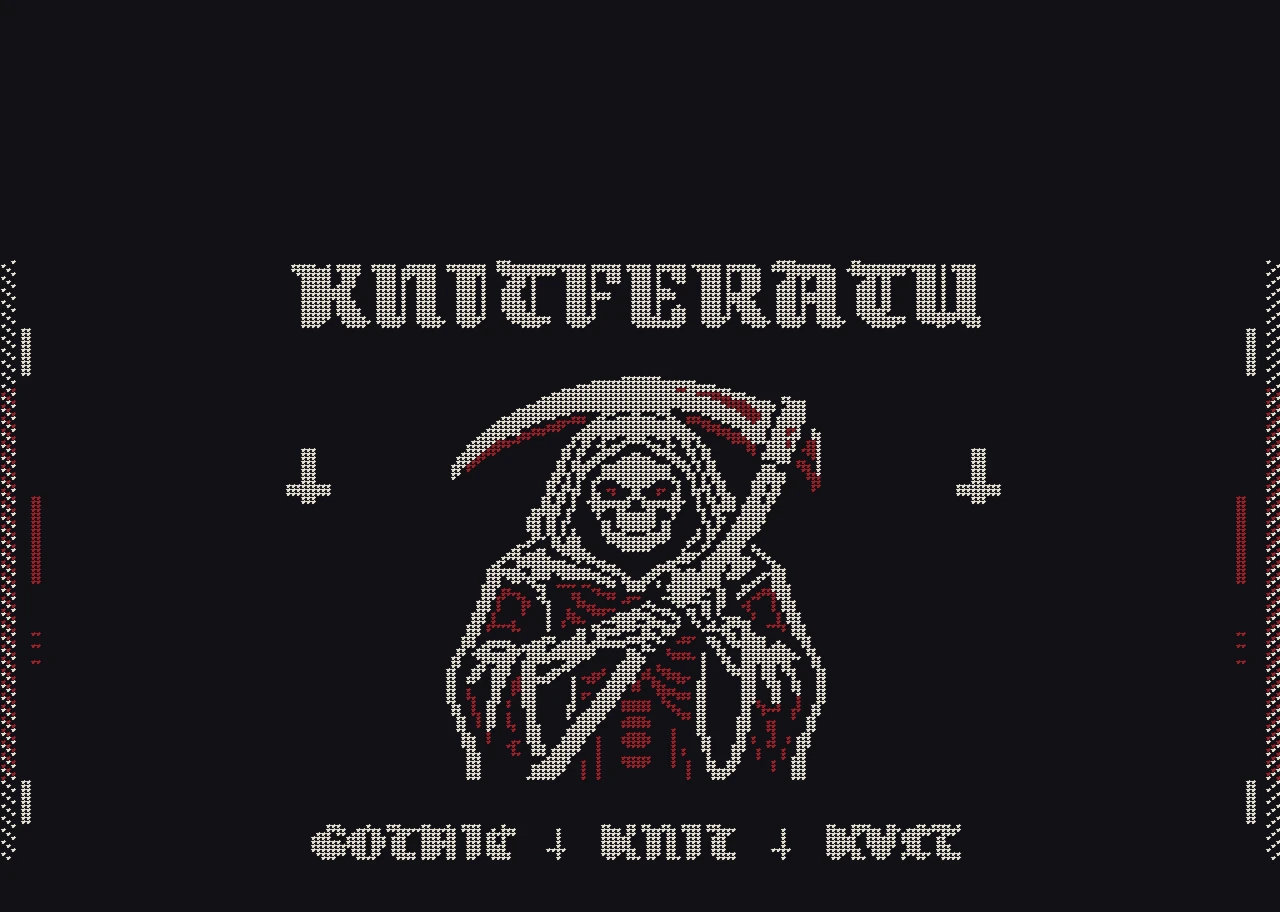
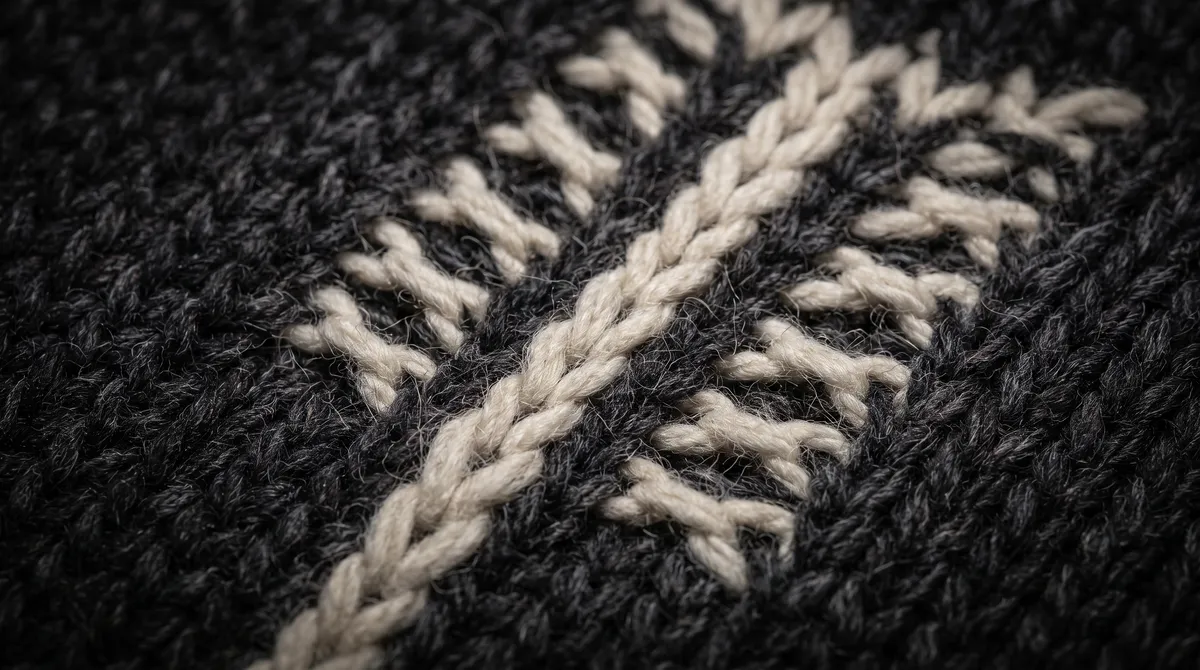
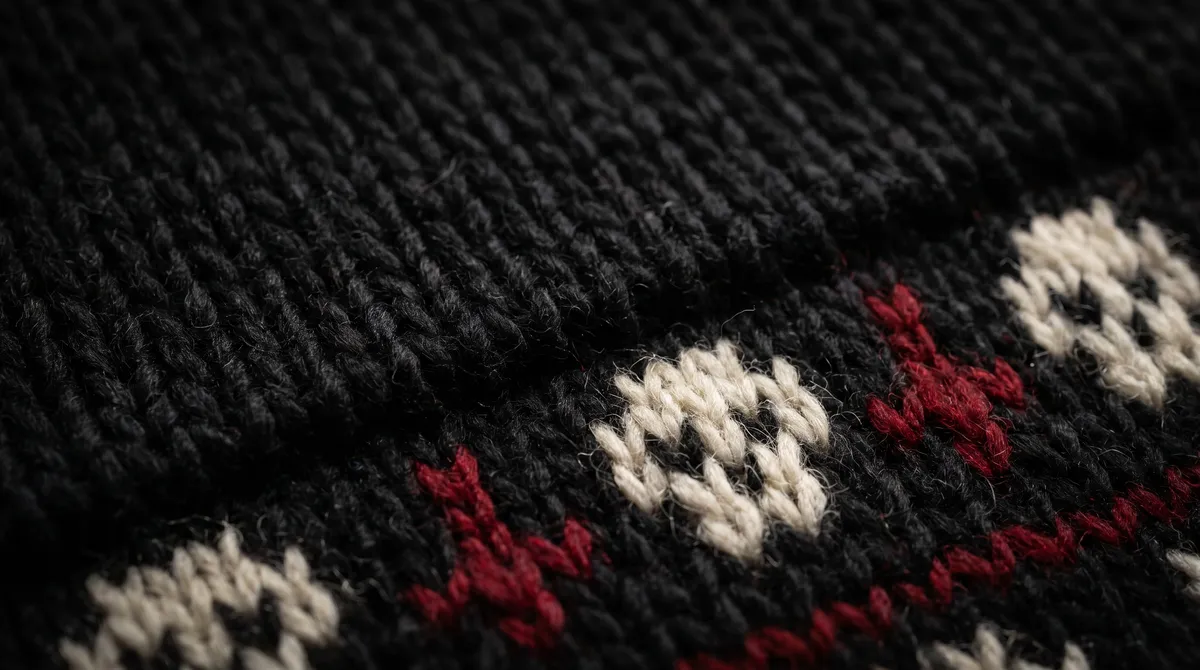
A jacquard knit is a fabric in which the pattern is built from the yarn itself, as the fabric is being made, rather than applied to a finished fabric afterwards. The machine carries two or more colours across every row and decides, stitch by stitch, which one shows on the face. When the row is done, the picture and the cloth are the same object.
That is the whole difference, and it is the reason the two things age so differently. Ink sits on top of a fabric and has its own lifespan: it cracks when the fibre underneath flexes, it fades in the wash, and eventually it peels. Yarn has no separate lifespan, because it is the sweater. A jacquard motif can only wear out when the garment does.
Where the name comes from
Joseph Marie Jacquard did not invent knitting. In 1804 he invented a way to control a loom with punched cards, so that a machine could be told which threads to lift on every single row without a human deciding each time. The principle moved to knitting machines, and the punched cards eventually became a file, but the logic never changed: a jacquard machine is a machine that reads a pattern.
This is also why those cards are a footnote in the history of computing. The chart that tells our machine where the bone-white goes and where the black goes is the direct descendant of a program written on cardboard in Lyon.
How a motif actually gets made
It starts as a chart: a grid where every square is one stitch. Not an image, a grid. Everything a designer draws has to survive being redrawn at that resolution, and this is where most motifs are won or lost. Curves become staircases unless the stitch count is chosen carefully. Thin lines vanish. Faces lose their expression.
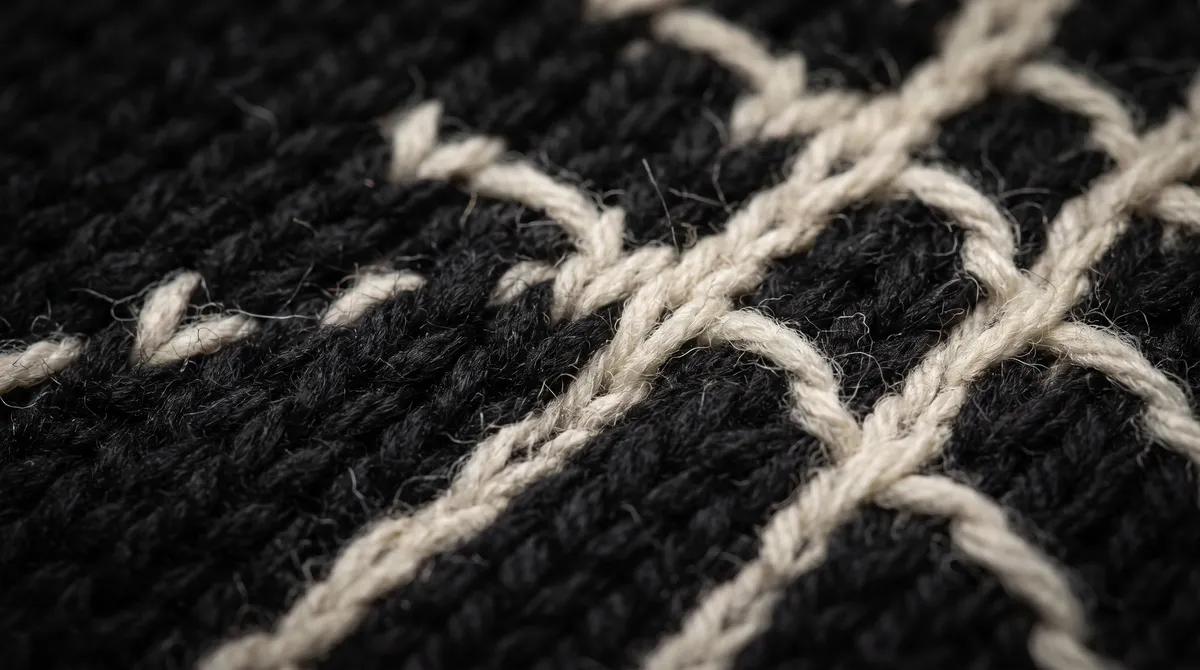
Then the yarns are mounted and the machine runs. On each row it carries the active colours across the full width, showing one on the face and floating the others behind. That is why the inside of a real jacquard shows the pattern in negative, with the unused colour running across the back in horizontal strands. It is the single most reliable way to identify one.
The panels come off the machine flat and are then linked, hand-finished and steamed. A garment is not knitted in one piece and spat out finished: the front, the back and the sleeves are separate pieces of engineering that have to end up the same width, which is harder than it sounds when a motif changes the tension of the fabric it passes through.
How to tell a jacquard from a print in three seconds
Turn it inside out. A jacquard shows the pattern in reverse, with floats of the unused colours. A print shows nothing, or a faint ghost of the design pressed through.
Look at the edge of the motif with the fabric stretched. A knitted edge is made of stitches and steps very slightly. A printed edge is perfectly smooth and, under tension, cracks into a fine white grid.
Run a fingertip across it. A print has a different texture from the fabric around it, usually slicker and slightly stiff. A jacquard feels like one continuous cloth, because it is one.
Check the weight. Carrying two or three colours through every row uses far more yarn than a single-colour fabric. A jacquard sweater is noticeably heavier than a printed sweatshirt of the same size.
Jacquard, intarsia, fair isle
They are not synonyms, and the difference is where the unused yarn goes. In jacquard proper the spare colours are carried along the whole row and float on the back. In intarsia each colour block has its own bobbin and there are no floats, which suits large single blocks of colour. Fair isle is a traditional pattern family, usually two colours per row worked in bands, made with the same carrying technique.
In practice a garment often uses more than one. A banded Christmas piece is closer to fair isle logic; a large single-colour figure is closer to intarsia; most of what we make is jacquard in the strict sense.
Why we only do this
Every motif in the collection had to be charted stitch by stitch before it could exist, which is why the collection grows slowly. A printed range can add a design in an afternoon. A knitted one takes days for a single motif, and some never make it onto the machine because they do not survive the grid.
The trade is straightforward. Slower to make, more yarn, more work per piece, and a garment where nothing can crack, peel or fade off the front, because there is nothing on the front. It is the same technique your grandmother's festive jumper used, and hers is probably still in a drawer somewhere, still legible.
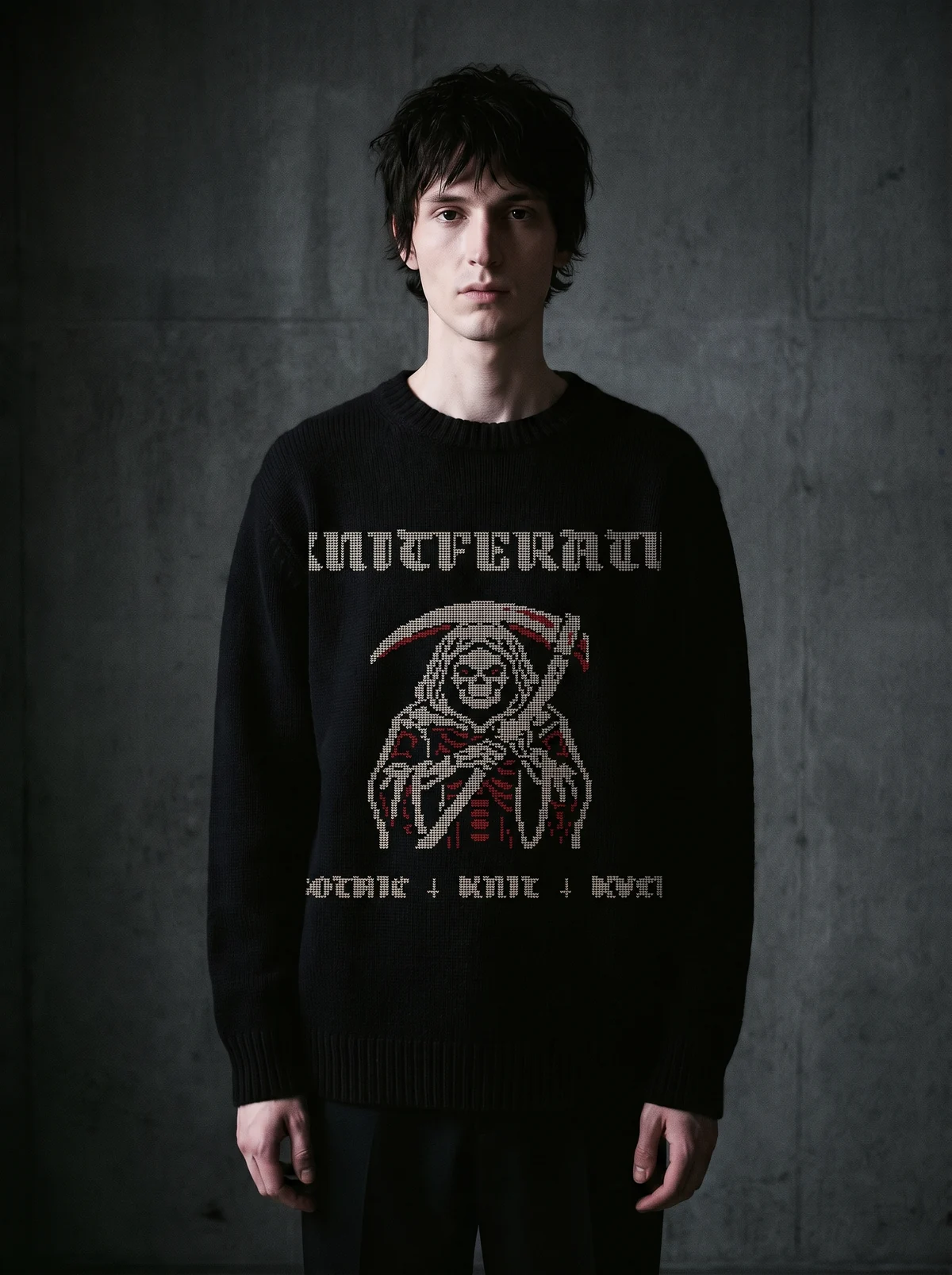
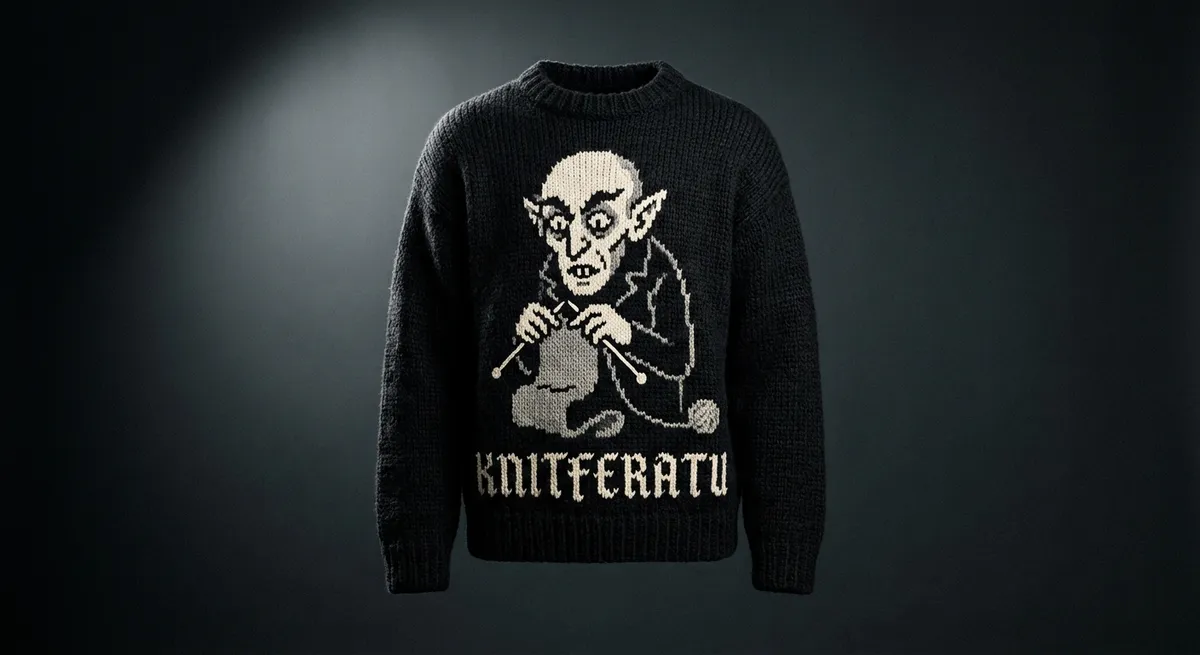
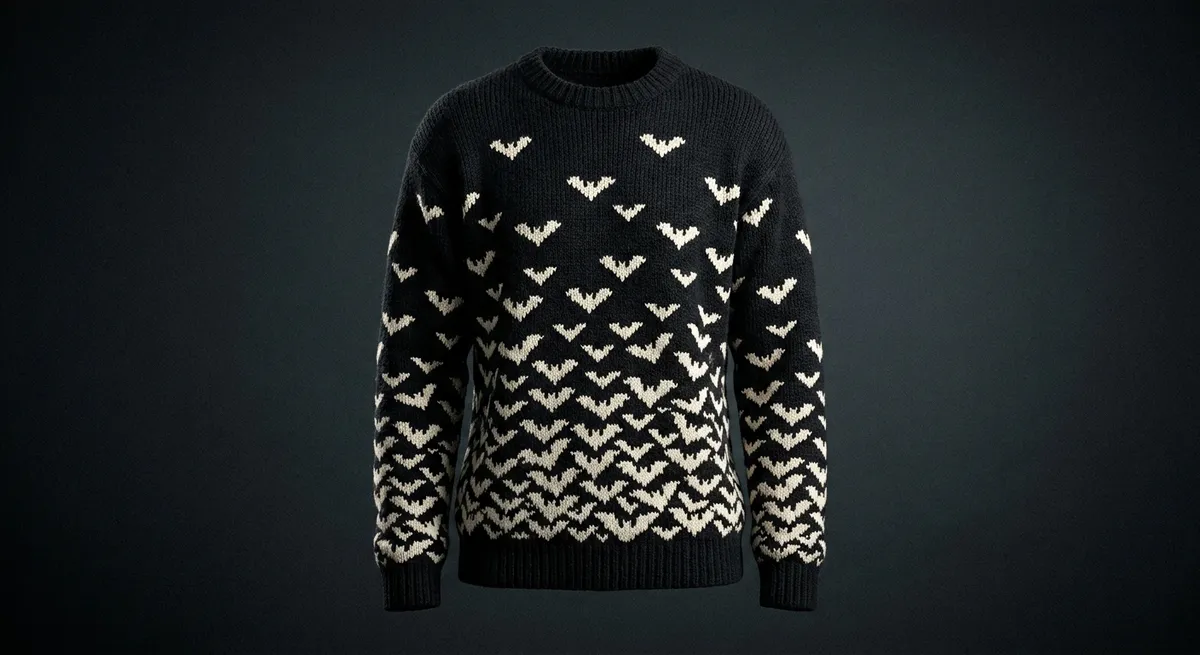
The pieces in this story
More from the Journal
How to wash a wool sweater without ruining it
Cold water, no agitation, dry flat. The three rules that keep a heavyweight knit alive, and the one mistake that kills it in a single cycle.
Intarsia, jacquard and fair isle: what the difference really is
Three words used as if they meant the same thing. They describe three different answers to one question: what happens to the yarn you are not using.
Why sweaters pill, and how to actually fix it
Pilling is friction, not quality. Here is what is actually happening on the surface of the fabric and the two minutes it takes to undo.
Knitted, never printed
Every motif is jacquard worked into the fabric on flat-bed machines. Nothing to crack, nothing to peel.
Made to order in Italy
Your piece does not exist until you order it: knitted, hand-finished and steamed in 2 to 3 weeks.
Free worldwide shipping
Tracked and free everywhere, with free size exchanges and 14 day returns.